Medicare Part and Prescription Costs
Medication management is often a huge part of managing elder care for your loved one. The most important point to remember is that all health care providers must be aware of all medications that have been prescribed for your loved one.
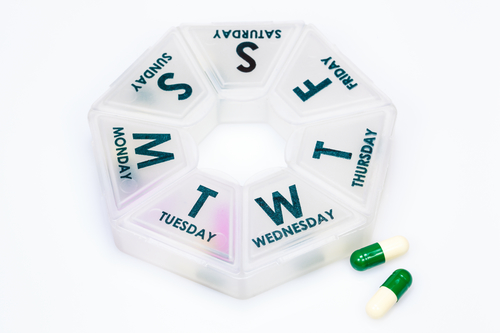
The problem of "poly pharmacy" arises when one physician is not completely informed of all the drugs that a patient is taking. The best solution is to prepare a chart listing the name and dosage of each drug, why it was prescribed, the name of the physician who prescribed it. purpose. Download Medications List in WORD • PDF • If you keep track of this on your computer, the information will be up to date. You can also list the cost of the drug, and who pays for it. Many elders are not aware of programs that reduce the cost of medications. Comparing the medications you list on your chart with the information in this article, will help you get control over prescription costs, and Medicare Part D benefits. Closing the Coverage Gap— Medicare Prescription Drugs Are Becoming More Affordable
.Click for Answers to Questions on this Page:
• What Medication Subsidies are available for Low Income People?
• How Does Prescription Advantage Program Work?
• Veteran's Prescription Benefits?
• Ways to Avoid the Doughnut Hole
• Danger of Double Coverage: Accidentally enrolling Twice
• Medicare and Medications After a Nursing Home Admission
• Free Alternative Medication Sources other than Medicare
• Question 1: How can low income clients reduce the standard costs of Medicare Part D?
Answer: Prescription premiums, deductibles and co-pays can be reduced with the Medicare Part D Low-Income Subsidy (LIS), also known as “Extra Help.” Anyone who qualifies for LIS does not have a coverage gap or “doughnut hole” in their benefit structure, unlike those who have standard Part D coverage (see chart above). LIS beneficiaries are also able to switch to a different Part D plan outside the normal open enrollment period, and they do not have to pay a penalty for late enrollment in Part D.
People automatically qualify and receive the LIS if they are eligible for both Medicare and Medicaid (“dual eligibles”), or if their Part B premium is paid by the state. If you are automatically eligible for LIS, there is no application to fill out, and you have a full subsidy (discussed below). But people who are not dually eligible, or whose Part B premium is not paid by the state, must apply for LIS.
• Question 2: If a person does not automatically qualify for Low Income Subsidy, where do they apply?
Answer: Apply for the Low Income Subsidy at any Social Security office, or online at benefitscheckup.org Millions of elders have applied for LIS, but many more are not aware of it.
• Question 3: Who is eligible for the FULL Low Income Subsidy?
Answer: People with incomes up to 135% of the federal poverty level (currently $1,218.38/mo single; $1,639.13/mo married) and low assets ($8,100 single; $12,910 married), get a full subsidy. They have no deductible, and copays of no more than $2.50 for generic and $6.30 for brand name drugs in 2010. They also pay no monthly premium for Part D coverage, as long as they are in certain qualifying plans known as benchmark plans. Benchmark plans are listed at www.medicare.gov as plans that qualify for “$0 premium with full Low Income Subsidy.”
Most people with LIS are advised to participate in a benchmark plan, to get the $0 premium. They would only consider a non-benchmark plan if there is no benchmark plan that has a formulary that supplies the particular medication that they need. SHINE counselors can assist with those decisions.
• Question 4: Who is eligible for a PARTIAL Low Income Subsidy?
Answer: Partial subsidies are available to people in two other low income groups.
People with income up to 135% of the poverty level, and assets between $8,100 -$12,510 (single) and $12,910 -$25,010 (married) pay an annual deductible of no more than $63 in 2010, and copayments of no more than 15% for the drug’s cost. They also have no monthly premium for benchmark plans. More information at
People with incomes up to 150% of the federal poverty level ($1,353.75/month single and $1,821.25/month married) and assets below $12,510 (single) or $25,010 (married) also qualify for the partial subsidy. They pay a sliding scale monthly premium, a deductible of no more than $63 in 2010, and copayments of no more than 15% of the drug’s cost.
Again, anyone who has full or partial LIS is not subject to the “doughnut hole.”
• Question 5: What if my income and assets are too high for the Low Income Subsidy?
Answer: Massachusetts residents can also apply for Prescription Advantage, our state pharmaceutical assistance program. Prescription Advantage is a “wrap around” program that works with Part D to further reduce prescription drug costs. Prescription Advantage has higher income thresholds than LIS. A person can have (up to 500% of the federal poverty level for those 65 or older, and still qualify. There is no asset test. It reduces costs for people who are exposed to Part D’s “doughnut hole,” among other benefits. People can apply by calling 1-800-AGE-INFO.
• Question 6: How do Veterans prescription benefits fit with Medicare Part D?
Answer: Because he was a Veteran, my father received some of his medication free from the Veterans Administration. The VA Website has a Medicare Part D - VA Prescription Drug Benefits Frequently Asked Questions (FAQs) discussion, which explains how you can choose to have a medication paid for and provided by either the VA or Medicare Part D, " but the prescription can not be covered by both plans at once." So, checking the formulary (list of drugs covered by the Part D Plan) for drugs not covered by the VA may help you decide whether to enroll in Medicare Part D, in addition to arranging for prescriptions to be mailed to you from the VA. My father was a Veteran who enrolled in Part D, because the Veterans Administration formulary did not include two very expensive medications, and those medications were not prescribed by the VA physician who supervised my father's care.
• Question 7: How do I avoid the Doughnut Hole?
Answer: People can avoid the doughnut hole by not going over the coverage limit. They can do this by buying generic drugs whenever possible. By avoiding brand-name prescriptions, the price-conscious person can save his Medicare coverage for the expensive brand name drugs. By staying out of the doughnut hole, the Medicare beneficiary is charged only small co-payments for each brand name prescription, instead of the expensive full price. People who use this strategy often buy their prescriptions at two different pharmacies to avoid billing mix ups by the pharmacy. They buy generics at one pharmacy, and buy the expensive name brand drugs at another pharmacy. The Medicare computer keeps track of all the purchases.
• Question 8: What is "Double Coverage"?
Answer: Double Coverage is a trap. The person accidentally enrolls in two a Part D plans when they don't need to. Retirees who belong to a Medicare Advantage HMO that already offers drug coverage that meets the Part D standards could loose their health insurance coverage if they accidentally enroll in another Part D Plan! If you belong to an HMO that already provides you with a standard prescription benefit, your HMO will send you a letter warning you not to make the mistake of double coverage. Signing up for a “free standing” Part D prescription plan that’s not part of the HMO can trigger the HMO to completely cancel the member’s health insurance!
• Question 9: If someone is being admitted to a nursing home, do they still need a Part D plan?
Answer: Yes, nursing home residents with Medicare must have a Part D plan, unless they have other creditable drug coverage. Medicaid will not cover any Part D-coverable drugs for Medicare beneficiaries, even for people who are dual eligible for Medicaid-Medicare who residing in nursing homes. Nursing home residents do have a Special Enrollment Period enabling them to switch Part D plans as frequently as every month. Switching plans may not help a resident quickly access non-formulary drugs they need, since any switch is not effective until the first day of the following month. CMS does require plans to provide transitional supplies to prevent disruption and give people a chance to switch plans or appeal for coverage. Guidance can be found in CMS’s Medicare Prescription Drug Benefit Manual. Chapter 6.
• Question 10: Can Medicare Part D cause problems for someone who is being admitted to a nursing home?
Answer: Although people on Medicaid pay no deductible, Part D could cause problems for nursing home patients who are mentally impaired and have no one to speak for them. The nursing home can’t tell their patients whether to join a particular plan, so mentally impaired patients can be randomly assigned to a plan by the nursing home, if they don’t have a Health Care Agent or Power of Attorney to make the decision for them.
Fact Sheet on Power of Attorney. If the Part D plan that is assigned to the patient does not cover a particular drug that the patient needs, there will be interruptions in the supply of the medication. Since nursing homes often use pharmacy suppliers such as Neighborcare that deliver in bulk, the nursing home might have to make special arrangements with different suppliers to obtain the medication that a patient needs. This is another example of how the advance planning that we prepare for clients protects them now and during times when they need care in the future.
• Question 11: Beyond Medicare and Medicaid, are there alternative sources of help for prescription costs?
Answer: Yes. MassHealth members pay $3.65 for both generic and non-generic drugs. The total pharmacy annual cap is now $200.00. And the total combined copayment is $250 annually.
MassHealth covered prescriptions must be filled if the individual is unable to pay the copay at the time of service. The pharmacy can bill for the copay later but must fill prescription. MassHealth Prescription Co Pay Memo.
You should contact the drug manipulator to ask if they can provide you with the prescription at a discount or no cost. “Also, contact Partnership in Drugs at their toll free number, 1-888-477-2669, to find out whether there are coupons, annual reductions, or even free medications available to you.
Medicare Part D Enrollment Info
SHINE Counselors for Medicare
Part D:
Call (800) 243-4636
Call us at (413) 567-5600 for long term care planning .